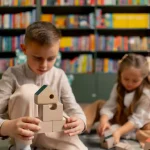


In today’s world, early childhood education is evolving rapidly. Research in psychology, neuroscience, and developmental science has shifted how educators understand young children’s learning needs. One concept that now sits at the center of effective early childhood education is learning through play. This approach is not new, but modern educational philosophy and scientific discoveries have elevated it to a fundamental strategy for supporting healthy development.
Parents, teachers, and caregivers often hear the phrase “learning through play,” yet many still wonder what it actually means, why it matters so much, and how it works in real educational settings. Learning through play is much more than letting children have fun. It involves structured opportunities, rich environments, intentional guidance, and meaningful experiences designed to boost academic, cognitive, emotional, social, and physical development.
This blog explores what learning through play truly means in modern early childhood education, how it shapes child development, and why it is considered an essential foundation for lifelong learning.
Understanding Learning Through Play: A Modern Definition
Learning through play means using playful experiences as intentional learning opportunities. Children engage in activities that stimulate curiosity, critical thinking, exploration, and creativity while teachers guide, observe, and support their learning.
In modern education, learning through play includes:
-
Child-led exploration
-
Teacher-guided activities
-
Purposeful classroom environments
-
Open-ended materials
-
Hands-on, sensory-rich experiences
-
Imaginative and social play opportunities
The goal is to blend joyful engagement with meaningful learning outcomes.
Why Play Is the Most Natural Form of Learning
Children learn best when they are active participants, not passive receivers of information. Play transforms learning from abstract concepts into tangible, interactive experiences.
Modern research shows that play:
-
Enhances cognitive development
-
Supports emotional regulation
-
Strengthens communication skills
-
Boosts problem-solving abilities
-
Encourages collaboration
-
Builds creativity
-
Improves physical coordination
-
Supports early literacy and numeracy
Play taps into how young brains naturally grow and connect information.
How Learning Through Play Aligns With Modern Educational Science
Neuroscience confirms that children learn most effectively when they are:
-
Engaged
-
Motivated
-
Curious
-
Emotionally secure
-
Physically active
Play checks every box. When children play, multiple regions of the brain activate simultaneously, strengthening neural connections and improving long-term retention.
Key educational principles supported by play include:
-
Constructivism — children build knowledge through hands-on experience
-
Social learning — children learn through interaction with peers
-
Cognitive flexibility — imaginative play teaches adaptive thinking
-
Executive function — play develops planning, memory, and self-control
These principles shape the core of modern early education.
The Different Types of Play in Early Childhood Learning
Modern educators use several categories of play to support development across different skills.
1. Free Play (Child-Initiated Play)
Children choose what they want to play and how to explore.
Benefits:
-
Fosters independence
-
Encourages creativity
-
Develops decision-making
-
Supports emotional expression
Free play helps children follow their curiosity and interests.
2. Guided Play
A blend of structure and freedom, guided play involves adult support without controlling the activity.
Benefits:
-
Enhances vocabulary
-
Strengthens concept understanding
-
Builds early academic skills
-
Keeps learning engaging and playful
Teachers guide gently using prompts, questions, or materials.
3. Structured Play
Activities have goals, rules, or learning objectives.
Examples:
-
Board games
-
Learning centers
-
Play-based math tasks
-
Science experiments
This form of play supports early academics while keeping learning active.
4. Pretend Play and Role-Playing
Pretend play involves imagination, storytelling, and symbolic thinking.
Benefits:
-
Language development
-
Empathy and perspective-taking
-
Creativity and narrative skills
-
Social and emotional growth
Role-play is especially important in social learning.
5. Physical Play
Movement is essential for early development.
Examples:
-
Running
-
Jumping
-
Dancing
-
Climbing
-
Obstacle courses
Physical play strengthens motor skills and helps with emotional regulation.
6. Sensory Play
Sensory exploration builds cognitive and motor skills.
Materials include:
-
Water tables
-
Sand trays
-
Clay or dough
-
Textured objects
-
Nature materials
Sensory play supports scientific thinking and self-regulation.
7. Cooperative Play
Children work together to accomplish a shared goal.
Benefits:
-
Teamwork and collaboration
-
Communication
-
Problem-solving
-
Conflict resolution
Cooperative play builds social awareness and emotional intelligence.
How Play Supports Key Areas of Development
Learning through play is so effective because it supports every aspect of early childhood development.
1. Cognitive Development
Through play, children learn:
-
Counting
-
Sorting
-
Pattern recognition
-
Early literacy
-
Cause and effect
-
Memory skills
Hands-on learning builds stronger cognitive pathways than passive instruction.
2. Language Development
Play provides endless opportunities for:
-
Conversation
-
Storytelling
-
Vocabulary growth
-
Verbal expression
-
Listening skills
Children naturally talk more during play, boosting linguistic development.
3. Social Development
Play helps children understand:
-
Sharing
-
Cooperation
-
Turn-taking
-
Negotiation
-
Social cues
-
Relationship building
Social play builds foundations for emotional intelligence.
4. Emotional Development
Children explore emotions safely during play.
They learn to:
-
Self-regulate
-
Express feelings
-
Build resilience
-
Cope with challenges
-
Develop confidence
Pretend play is especially powerful for emotional growth.
5. Physical Development
Motor skills grow dramatically through play.
Development includes:
-
Gross motor (running, climbing)
-
Fine motor (writing, grasping, building)
-
Coordination
-
Balance
Play supports the physical readiness needed for later academic success.
Learning Through Play in Modern Classrooms
Modern early childhood classrooms are designed intentionally to support play-based learning.
Features include:
-
Learning centers (blocks, art, writing, science, dramatic play)
-
Flexible seating
-
Play-based curriculum
-
Hands-on materials
-
Outdoor learning spaces
Teachers serve as facilitators, supporting exploration, guiding questions, and encouraging self-discovery.
Balancing Play With Academic Learning
Some people assume play is separate from academics, but in modern education, they are deeply connected. Play actually enhances academic readiness.
Play supports:
-
Early reading through storytelling and language
-
Math skills through counting games
-
Science exploration through sensory play
-
Problem-solving during building activities
-
Fine motor readiness for handwriting
Children who learn through play often perform better academically later on.
The Role of Adults in Learning Through Play
Teachers and caregivers play a crucial role in shaping high-quality play experiences.
Adults support learning by:
-
Asking open-ended questions
-
Providing stimulating materials
-
Creating safe, engaging spaces
-
Encouraging social interaction
-
Observing learning patterns
-
Allowing children to make choices
Play becomes richer when adults guide gently and intentionally.
Creating Playful Learning Environments at Home
Learning through play doesn’t just happen in school. Parents can create opportunities at home with simple activities.
Ideas for home-based playful learning:
-
Pretend play with costumes
-
Building with blocks or recycled materials
-
Art stations
-
Outdoor scavenger hunts
-
Cooking together
-
Storytelling games
-
Music and movement sessions
Play does not require expensive tools, just imagination.
Frequently Asked Questions
1: Is play enough to prepare children for school?
Yes, play builds the cognitive, social, emotional, and motor foundations needed for school readiness. Children who learn through play develop stronger problem-solving skills, better language abilities, and greater emotional self-regulation. Play is not a break from learning; it prepares children for academic success.
2: Does learning through play replace academics?
Not at all. Instead, play enriches academic learning. Early math, literacy, science, and social skills are naturally embedded in play-based environments. Modern education blends playful exploration with focused learning to create well-rounded, confident learners.
Final Thoughts
Learning through play is one of the most powerful and research-supported approaches in modern early childhood education. It nurtures the whole child, mind, body, emotions, and social relationships. By blending joy with learning, play enables children to develop essential skills in a way that feels natural, meaningful, and engaging.
In a world that increasingly values creativity, problem-solving, and emotional resilience, play is not just helpful, it is essential. Whether in the classroom or at home, embracing playful learning gives children the freedom to explore, imagine, question, and grow into confident, capable learners ready for the future.