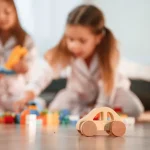


Play is one of the most powerful and natural ways children learn. Long before formal schooling, children explore their world through play, touching, observing, imagining, experimenting, and interacting with their environment. Far from being just entertainment, play forms the foundation for healthy development and long-term learning. Modern research confirms that play strengthens the brain, enhances emotional skills, builds problem-solving abilities, and supports social growth in ways structured learning alone cannot.
In early childhood education, “learning through play” has become a cornerstone teaching philosophy because it reflects how children naturally absorb information and develop core life skills. Whether the play is imaginative, physical, structured, or free-flowing, each type contributes uniquely to a child’s cognitive and emotional development. This blog explores the science behind playful learning, how it shapes children’s growth, and why incorporating play into education leads to meaningful, long-lasting success.
Understanding the Concept of Learning Through Play
Learning through play means using play-based experiences as opportunities for children to develop knowledge, skills, and understanding. These experiences may be child-led, teacher-guided, or spontaneous, but they always involve curiosity, exploration, joy, and engagement.
Learning through play includes:
-
Problem-solving
-
Creativity
-
Social interaction
-
Negotiation and communication
-
Fine and gross motor development
-
Emotional self-regulation
-
Language and vocabulary growth
Play is not separate from learning, it is learning.
Why Play Matters: The Cognitive Science Behind It
Modern neuroscience reveals that play strengthens the architecture of the developing brain. When children play, their brains create new neural connections that support complex thinking.
Brain benefits of play include:
-
Strengthening executive function (memory, planning, focus)
-
Enhancing neural plasticity
-
Boosting creativity and divergent thinking
-
Improving language processing
-
Encouraging active problem-solving
-
Supporting emotional resilience
Play activates multiple areas of the brain at once, making learning deeper and more effective.
Types of Play and Their Developmental Benefits
Not all play looks the same, but each type offers powerful learning advantages. Early childhood experts recognize several key types of play that shape child development.
1. Free Play (Unstructured Play)
Free play is child-led and driven by imagination. The child chooses what to play, how to explore, and what role to take.
Benefits:
-
Boosts creativity
-
Builds independence
-
Encourages curiosity
-
Strengthens decision-making
-
Enhances emotional expression
Children discover what interests them and learn to explore without external pressure.
2. Guided Play
Guided play combines child-led exploration with teacher or parent support. Adults set up the environment or prompt exploration but allow the child to control the play.
Benefits:
-
Encourages rich learning experiences
-
Supports vocabulary and concept development
-
Helps children make deeper connections
-
Builds confidence with gentle guidance
Guided play is especially effective for academic learning.
3. Structured Play
Structured play includes specific rules or goals, such as board games, puzzles, or educational games.
Benefits:
-
Teaches patience, turn-taking, and cooperation
-
Strengthens logical thinking
-
Supports early math and literacy skills
-
Enhances concentration
Structured play builds executive function, skills crucial for classroom success.
4. Physical Play
Physical play includes running, jumping, climbing, dancing, and outdoor activities.
Benefits:
-
Builds motor skills
-
Supports physical health
-
Reduces stress
-
Improves coordination
-
Increases attention span
Movement is essential for brain development and emotional balance.
5. Social Play
Social play involves group interaction, teamwork, or role-playing.
Benefits:
-
Builds communication skills
-
Encourages empathy
-
Teaches negotiation and conflict resolution
-
Supports emotional intelligence
Children learn how to share, collaborate, and understand other perspectives.
6. Imaginative and Pretend Play
Pretend play transforms children into parents, superheroes, chefs, teachers, or animals. It is one of the most cognitively rich forms of play.
Benefits:
-
Enhances creativity
-
Strengthens language development
-
Encourages storytelling
-
Supports emotional exploration
-
Helps children make sense of the world
Pretending is practice for real life.
7. Exploratory and Sensory Play
Sensory play includes touching textures, playing with water, sand, clay, or exploring materials with different properties.
Benefits:
-
Builds fine motor skills
-
Enhances cognitive processing
-
Improves focus
-
Supports scientific understanding
-
Helps with emotional regulation
Sensory experiences help children connect physical sensations with learning.
How Play Supports the Core Areas of Development
Play-based education builds the foundation for lifelong learning. Here’s how it influences key developmental domains:
1. Cognitive Development
Through play, children learn how to:
-
Think critically
-
Make predictions
-
Observe cause and effect
-
Solve problems
-
Experiment with ideas
Games, puzzles, blocks, and exploration develop early math and science skills naturally.
2. Language Development
Play expands communication skills through:
-
Storytelling
-
Role-playing
-
Conversations with peers
-
New vocabulary
-
Listening and speaking practice
Language learned during play feels organic and meaningful.
3. Social Development
Through shared play, children learn how to:
-
Collaborate
-
Take turns
-
Share resources
-
Read social cues
-
Build friendships
-
Resolve conflicts
Social play helps children practice real-world interactions.
4. Emotional Development
Play allows children to explore emotions safely. They learn:
-
Self-regulation
-
Emotional expression
-
Coping strategies
-
Confidence building
-
Empathy
Pretend play especially supports emotional understanding.
5. Physical Development
Both fine and gross motor skills are strengthened through:
-
Running
-
Climbing
-
Drawing
-
Cutting
-
Building
-
Manipulating objects
Physical play lays the foundation for coordination and handwriting skills.
Play-Based Learning in Modern Education
More schools and early childhood programs now integrate play into curriculum because research shows that children learn better when they feel engaged and joyful.
Play-based classrooms include:
-
Activity centers
-
Imaginative play stations
-
Block areas
-
Sensory tables
-
Dramatic play corners
-
Outdoor exploration zones
Teachers serve as facilitators, not directors, of learning.
Academic Skills Developed Through Play
Many people mistakenly believe play and academics are separate, but play builds academic readiness more effectively than drills or worksheets.
Through play, children learn:
-
Letter recognition
-
Early reading skills
-
Storytelling
-
Counting and sorting
-
Shapes and patterns
-
Scientific thinking
-
Basic problem-solving
-
Art and music exploration
Play creates natural learning moments that deepen understanding.
Creating Play-Based Learning at Home
Parents can support playful learning with simple, everyday activities.
Ideas include:
-
Building with blocks or LEGO
-
Creating pretend shops or kitchens
-
Playing music and dancing
-
Nature walks for discovery
-
Storytime with role-playing
-
Arts and crafts
-
Scavenger hunts
Children learn best in environments filled with curiosity and encouragement.
The Role of Adults in Play-Based Learning
Adults are key in creating safe, stimulating play environments.
Adults should:
-
Observe without interrupting
-
Ask open-ended questions
-
Encourage exploration
-
Provide materials that inspire creativity
-
Support, not take over, play
Children learn more deeply when adults guide gently.
Frequently Asked Questions
1: Is play-based learning as effective as traditional academic instruction?
Yes, research consistently shows that play-based learning is more effective for young children because it strengthens cognitive, emotional, physical, and social development simultaneously. It builds foundational skills that formal learning later relies on, including focus, problem-solving, language, and creativity.
2: Does play help with early literacy and numeracy?
Absolutely. Storytelling, imaginative play, and role-playing support early reading and language skills. Counting games, building blocks, and puzzles strengthen numeracy. Play makes academic concepts understandable and engaging.
3: How much play should young children have each day?
Experts recommend several hours of free and guided play daily. While the exact amount varies by age, play should be a central part of early childhood education, not an occasional activity.
Final Thoughts
The science of learning through play is clear: play is not a break from learning, play is learning. It builds the foundation for creativity, language, emotional understanding, independence, and cognitive strength. Whether in classrooms or at home, play allows children to explore the world, build meaningful connections, and develop lifelong skills that shape their academic and personal growth.
When adults embrace play as a vital educational tool, children thrive. Their curiosity deepens, their confidence grows, and their natural love for learning becomes a powerful force that carries into later schooling and life. Learning through play is essential, effective, and deeply enriching, shaping not just smarter children, but more resilient, expressive, and imaginative human beings.